
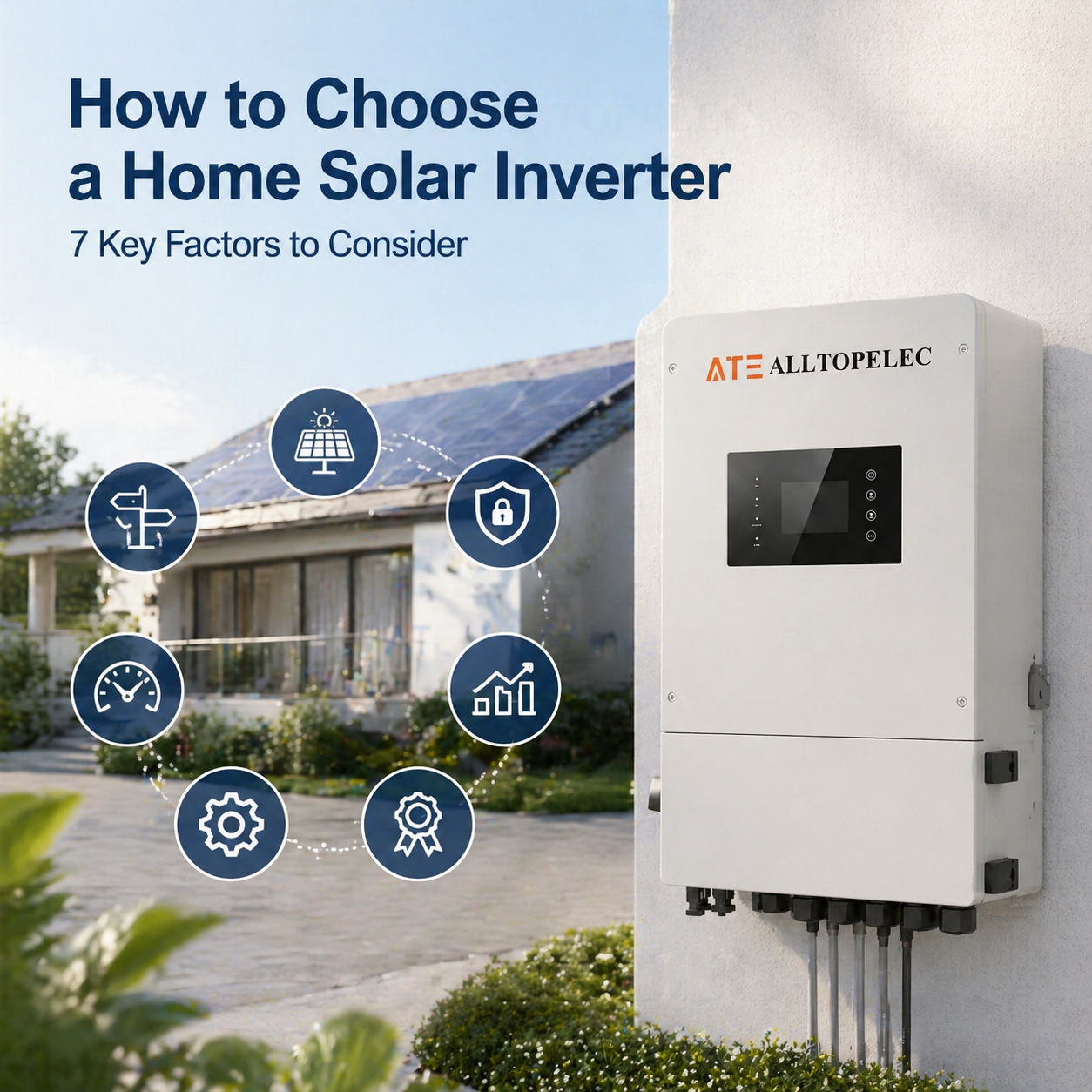
Summary: Choosing the right inverter is critical for solar system performance. This guide helps you select the best option based on your home’s needs, budget, and local conditions.
Detailed Content:
1. Determine System Type:
Grid-Tie: Needs grid interaction and anti-islanding protection.
Off-Grid: Must operate independently, usually integrates a charge controller.
Hybrid: Manages both solar and batteries, allows seamless grid/battery switching.
2. Power Rating & Matching:
Rule: Inverter AC power rating ≈ PV array DC power x 1.1 (to handle peak conditions).
Consider: Future expansion plans, local climate, temperature derating.
3. Efficiency Matters:
European Efficiency: Weighted average efficiency, better reflects real-world operation.
Peak Efficiency: Maximum efficiency under ideal conditions.
Aim for: European efficiency > 97%.
4. MPPT Configuration:
Single MPPT: Suitable for a single roof plane with no shading.
Dual/Multi MPPT: Essential for roofs with multiple orientations or partial shading.
MPPT Voltage Range: Must encompass your solar string’s operating voltage.
5. Protection & Safety Features:
Anti-Islanding: Mandatory for grid-tie systems.
Reverse Current Protection: Prevents back-feeding if not permitted.
Over-voltage/Over-current: Protects the inverter and your home.
Lightning/Surge Protection: Crucial in areas with electrical storms.
6. Monitoring & Smart Features:
Local Display: LCD screen for basic parameters.
Remote Monitoring: Wi-Fi/4G for viewing data on a phone app.
Data Logging: Tracks production, efficiency, and errors.
Smart Functions: Load forecasting, time-based control, VPP readiness.
7. Brand, Warranty & Certification:
Certifications: Must have local grid compliance certificates (e.g., UL 1741, VDE-AR-N 4105).
Warranty: Standard is 5-10 years; some offer extendable warranties.
Service: Choose a brand with reliable local technical support and service network.
Selection Process:
Assess your energy consumption and desired system size.
Analyze your roof’s orientation, shading, and available space.
Research local grid connection policies and technical requirements.
Define your budget.
Compare inverter models based on the factors above.
Consider future expandability (adding batteries or more panels).