

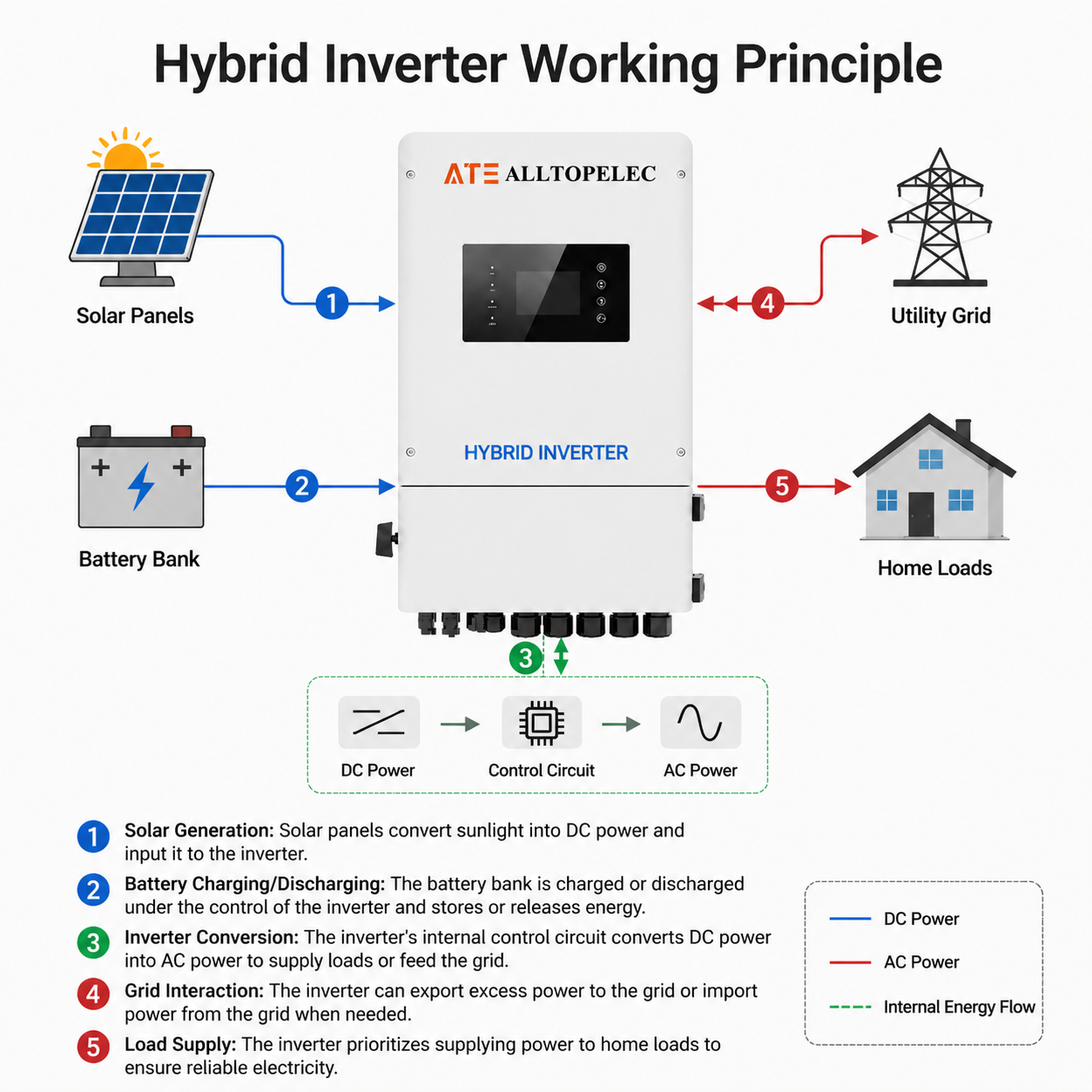
Summary: The solar inverter is the core component of a PV system, responsible for converting the DC electricity from the panels into usable alternating current (AC) for homes and the grid. Understanding different inverter types and their functions is crucial for system optimization.
Detailed Content:
1. Core Functions:
DC to AC Conversion: Converts DC from panels to grid-compatible AC.
Maximum Power Point Tracking (MPPT): Continuously adjusts the electrical operating point to extract the maximum possible power from the panels.
Grid Synchronization: Ensures the output current matches the grid’s frequency and phase.
Safety Protections: Includes anti-islanding, over-voltage, over-current protection.
System Monitoring: Provides data on generation, diagnostics, and remote monitoring.
2. Main Types:
String Inverters: Most common, cost-effective, ideal for roofs with consistent conditions.
Microinverters: One per panel, maximizes individual panel output, excellent for shaded roofs.
Central Inverters: Used in large-scale power plants, high power, low cost per watt.
Hybrid/Battery Inverters: Integrate battery management for solar+storage systems.
3. Key Technical Parameters:
Conversion Efficiency: High-quality models achieve 97-99%.
Max DC Input Voltage: Typically 600-1500V.
Number of MPPTs: 1-3; multiple MPPTs optimize strings with different orientations.
Ingress Protection (IP) Rating: IP65 is suitable for outdoor installation.
Communication Interfaces: Wi-Fi, 4G, Ethernet, etc.
4. Smart Features:
Dynamic Reactive Power Compensation: Improves grid power quality.
Nighttime Reactive Power Support: Some inverters can supply reactive power at night.
Virtual Power Plant (VPP) Support: Enables participation in grid services.
AI Optimization: Intelligent scheduling based on weather forecasts and usage patterns.
5. Selection Guide:
Match inverter power rating to system size (typically 1-1.2 times the PV array capacity).
Consider local grid requirements and certification standards.
Evaluate shading and roof orientation.
Balance upfront cost with long-term reliability and features.